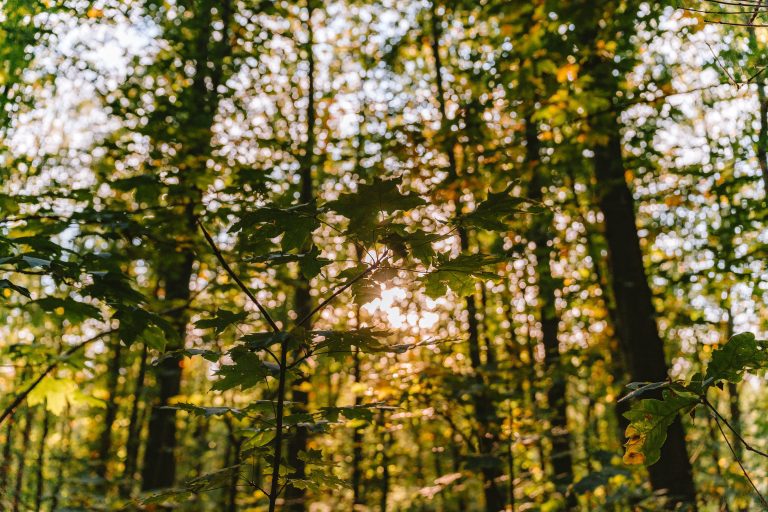

There is a quiet ache many people carry today; a feeling of disconnection they cannot quite name. We live in an age of endless notifications, artificial light, crowded schedules, and constant stimulation, yet despite all our conveniences, many of us feel depleted, anxious, overstimulated, and strangely lonely. We spend our days indoors under fluorescent lights, staring into glowing screens, disconnected from the rhythms that once guided human life for thousands of years. And somewhere deep within us, the nervous system remembers another way of living.
It remembers sunlight warming our skin, the sound of wind moving through trees, rivers and campfires, birdsong and ocean tides, and the feeling of bare feet touching the earth.
Perhaps this is why we feel so instinctively drawn to nature. Even as children, most of us felt captivated by forests, creeks, beaches, mountains, or open fields. We collected rocks and leaves, climbed trees, chased waves and watched clouds move across the sky. Nature has always called on us because we are not separate from it, we are part of it.
Modern life often asks us to forget this truth.
Our nervous systems were never designed for the relentless pace of today’s world. The constant exposure to noise, information, social media, and digital stimulation keeps many people trapped in a low-grade stress response. We become mentally exhausted yet emotionally restless. Sleep becomes lighter. Anxiety increases. Even moments of rest are often interrupted by screens and notifications.
Nature offers something profoundly different.
Under the naked sky, the body begins to soften. Heart rates are slow. Breathing deepens. Muscles unclench. Thoughts become quieter. There is something deeply regulating about being surrounded by living things that ask nothing from us.
A tall forest does not demand productivity.
A river does not care about how many ‘likes’ you get.
A campfire does not ask you to perform.
Nature simply invites you to be present.

Spending time outdoors can feel deeply healing to the nervous system. Studies have shown that time in green spaces can lower cortisol levels, reduce blood pressure, improve mood, and support emotional regulation. But beyond the science, many people intuitively know this already. They feel calmer after sitting near water or restored after a walk through the woods.
There is something especially healing about witnessing the transition points in nature like a sunrise and sunset. A sunrise carries the quiet promise of beginning again. Even after difficult nights, grief, mistakes, disappointment, or exhaustion, the morning sun rises without fail, reminding us that today is a brand-new day.
Likewise, sunsets offer their own kind of medicine. A sunset teaches surrender. It whispers that tomorrow is another day and another chance to try again, heal, forgive, create, or begin anew.
In Japan, there is a practice known as Shinrin-yoku, often translated as “forest bathing.” Forest bathing simply means immersing yourself in the atmosphere of the forest and engaging your senses fully. The practice encourages people to walk slowly, breathe deeply, observe the textures of bark and leaves, listen to birdsong, and absorb the stillness of the natural world.
The goal is not to “get somewhere.”
The goal is to reconnect.
Nature reminds us that we belong to something larger than ourselves. When we sit beside water or beneath ancient trees, we remember that life exists in countless forms all around us. Birds sing to one another overhead. Bees move from flower to flower. Trees communicate underground through intricate root systems. Even the smallest leaf contains astonishing beauty and intelligence.
When we spend time outdoors, we begin communing again with other living beings. We step outside the isolating bubble of technology and modern life and re-enter the wider web of existence. It nourishes something deep within the soul to remember that we are not alone.
Many people describe feeling held by nature, as though the earth itself offers a kind of quiet maternal comfort. This is why phrases like “Mother Earth” resonate so deeply. The rhythmic sound of waves, the sway of branches in the wind, the warmth of sunlight, and the crackle of a campfire all seem to speak a language the nervous system instinctively understands.
Even animals can help regulate our stress response. Listening to a cat purr, for example, has an almost hypnotic effect on the body. The low rhythmic vibration and steady sound can gently pull someone out of fight-or-flight mode and into a more relaxed parasympathetic state. It is one reason people often feel calmer after holding or sitting quietly beside a contented animal.
Simple practices can strengthen this reconnection. Walking barefoot on grass, soil, or sand, often called grounding or earthing, can help people feel calmer and more centered. Swimming in the ocean or floating in natural water has a uniquely restorative effect, almost as though stress dissolves with every wave.
Sitting beside a fire at night can also be deeply therapeutic. Humans have gathered around fires for thousands of years, and many researchers believe firelight naturally induces a meditative state. Gazing into flames can quiet mental chatter, slow the body and shift the nervous system into rest-and-repair mode. Some scientists even suggest that this deeply relaxed state may support the body’s natural cellular repair process by reducing stress hormones and moving the body out of chronic survival mode.
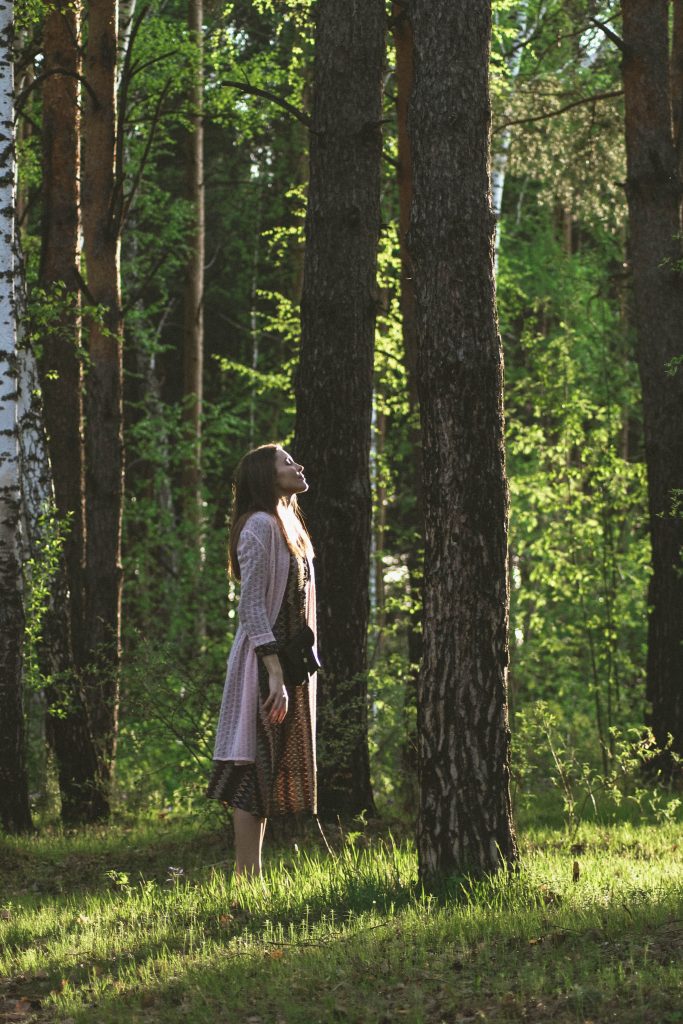
These experiences awaken the senses that have become dulled by excessive screen time and indoor living.
Nature asks us to notice.
To notice the scent of pine after rain.
The coolness of morning air.
The changing colours of the sky at dusk.
The hypnotic rhythm of running water.
The softness of moss beneath our feet.
Importantly, reconnecting with nature does not require living deep in the wilderness. Even in cities, opportunities for connection exist everywhere if we are willing to slow down enough to notice them.
When you step outside your door each morning, pause for one full minute before reaching for your phone. Close your eyes and let your senses absorb your surroundings. Listen carefully. Perhaps you will hear a neighborhood bird singing from a nearby branch or a dog lapping up some water. Feel the temperature of the air against your skin. Notice the scent of rain, flowers, or freshly cut grass.
Look closely at a single leaf and observe the astonishing variety of greens within it. Study the intricate veining that carries life through something so small and delicate. Watch how sunlight filters through branches and how clouds drift overhead without urgency.
These tiny moments matter more than we realize.
They gently pull us out of chronic mental overstimulation and back into embodied presence. They remind us that life is happening here, now, and not only on screens, schedules, or social media feeds. Nature nourishes the soul because it reconnects us to what is real, timeless, and alive. It reminds us that healing is not always found in doing more, but often in slowing down enough to remember what we already belong to. Time in nature reminds us that despite the noise of modern life, we are still connected to the earth, to other living beings, and to something ancient and steady within our own spirit.
And perhaps that is one of nature’s greatest gifts: it reminds us that we were never meant to navigate life entirely alone.
Action Step:
This week, choose one intentional moment to reconnect with nature without distractions. Leave your phone behind. Spend at least twenty uninterrupted minutes outdoors, walking through a park, sitting beside water, standing barefoot in the grass, or simply watching the sunrise or sunset. Instead of thinking, planning, or scrolling, allow yourself to simply observe and feel. Notice what shifts inside you when you stop trying to escape the world and begin being curious about it again.