
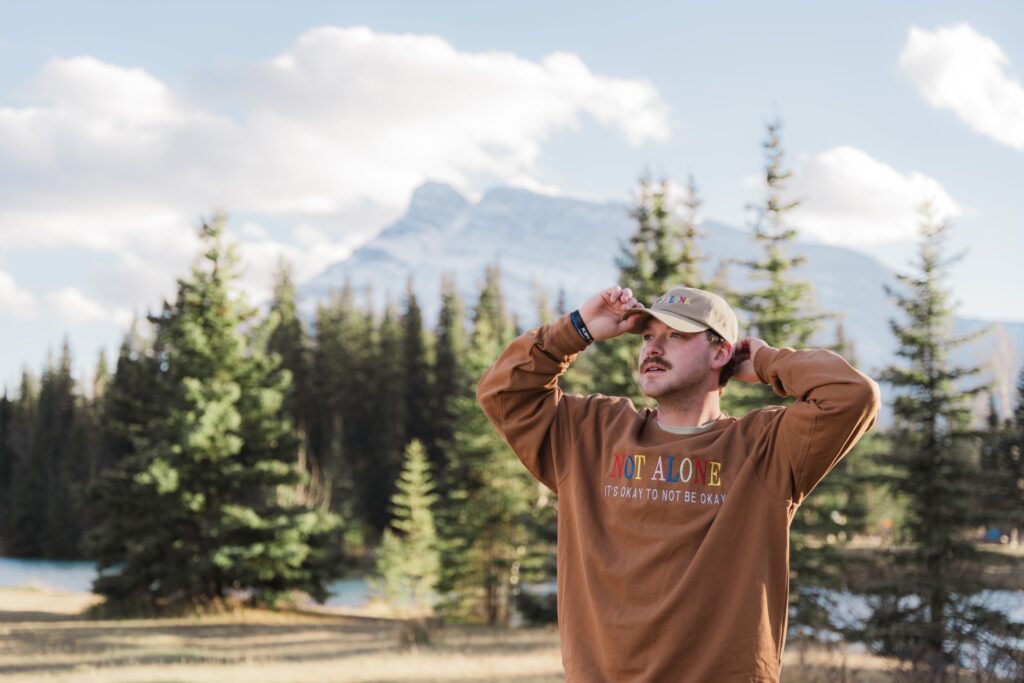
Humboldt Broncos crash survivor and mental health advocate Tyler Smith to speak At 'Check In, Don't Check Out'
The odds were astronomical, more than one-in-a-million. In 2018, the Humboldt Broncos had been heading up and down rural Saskatchewan highways for almost half a century with little-to-no problems—them and dozens of other junior and youth hockey teams from across the province, with the lone exception being the 1986 Swift Current Broncos single-vehicle crash that killed four. These long bus rides are a rite to passage for hockey players across Canada and the United States, and rarely does anything bad occur.
As hockey teammates, coaches, and management, their fates were always intertwined as a part of a storied club in the Saskatchewan Junior Hockey League, but in a mere fraction of a second their lives would be scattered, lost, and their legacy, as a whole and individually, would be forever changed.
On the evening of July 6, 2018, near the village of Armley, Saskatchewan, a busload of 29 souls were headed to a playoff game in a neighbouring town, cruising northbound along on Highway 35. They had done this dozens of times before and everything was as usual on the bus. Players were napping, reading, listening to music with hoodies pulled down over their heads. These Broncos were dialing-in for an important game and were not to be distracted.
As their bus entered Armley Corner, where their road intersects with Highway 335, for an instant, time stood still. In the blink of an eye, life changed for all onboard—with a sudden roar and incomprehensible violence, the entire front of the bus disappeared.
Of the 29 souls onboard, only 13 would survive. Little did they know, a transport truck had careened through a stop sign and into the intersection just ahead of them and the bus had T-boned the vehicle.
“Grief is a wild beast,” recounts Tyler “Ty” Smith, a former Broncos player and a survivor of the crash. On Tuesday, Oct. 7, 2025, Ty will be at the Serbian Centre as the keynote speaker for Check In, Don’t Check Out—an event to discuss men’s mental health, put on by the Canadian Mental Health Association and Private Financial Group. For more information, call 519-255-9940 x161.
It’s been quite a journey for Ty as the past seven-and-a-half years have unfolded. For three years now, he has been sharing his story.

“It’s really quite fulfilling and something I never anticipated doing,” he explains. “It’s interesting where a life takes you to sometimes. I’ve been to some really neat places that I never thought I’d be before and I’ve met some incredible people. I’m super grateful to be able to share my story a little bit and connect with individuals that I probably wouldn’t have connected with before.”
“A lot of people ask how I can just keep sharing and bringing up past trauma,” he continues. “As much as the core of it was that day, when we lost 16 beautiful souls, it’s obviously been a little bit more of a personal, for me, journey afterwards.
“Difficult roads lead to beautiful destinations. Originally, I never thought that was true—I never thought I’d be able to find a silver lining and find myself again. Over time, the support systems and the people around me helped guide me into a place of finding joy again and being able to put myself out there and get outside of my comfort zone a little bit more and do this.”
Ty credits his fiancée, Kat Kastner, as someone who has pushed him to grow and heal. The couple, who marry this fall, competed together and won The Amazing Race Canada in 2023, and enjoy travelling together.
“This is your journey and your life and you are allowed to seek joy and you’re allowed to go out there and meet new people and see new parts of the world,” he states. “I think that’s something that I’ve leaned into, with the help of my fiancée—and I think she’s been able to push me, in a way, to keep doing it and keep trying and keep getting out there.”
Ty says that he never anticipated being a mental health advocate or speaker, but he enjoys it and sees it as a way of giving back for the overwhelming support that he, his teammates, and their families received in response to the disaster.
“As cliche as it sounds, even if just one person leaves every event that I do with a little bit more hope and a little bit more purpose to keep going, and keeps taking steps and to keep trying—because, on the personal side of things, grief’s an ever-evolving thing and I think right now I understand a little bit more of what works for me and I’ll rely on that,” he explains. “I know I have people in my corner and I’m able to practice what I preach.”
“Mental health is not a battle to be won; it’s a journey to continue walking. I think COVID brought up a lot for a lot of people. We weren’t prepared to sit with our own thoughts for such a long time with no social connection, but I think getting to a place to figure out what works for you—I think can be quite a beautiful journey.”