

The scholastic bookfair order had arriving, growing my sisters’ Babysitters Club collection with the newest book in the series, #54, Mallory and the Dream Horse. The lilac cover featured a photo of a white horse stamped on the front, like the breed found in our doll collection that transported Barbie to her office job. The year was 1996 and we were “horse girls” vowing to dedicate our lives to the equestrian circuit as we decorated our rooms with Lisa Frank stickers. Then came the internet and meme culture turned the idea of a horse girl into a punchline, shorthand for obsession, social eccentricity, arrested development. The joke was easy and dismissive. It flattened an entire discipline into caricature, erasing the labour, business acumen, physical endurance, and the care required to sustain an equestrian lifestyle. No one understands that erasure better than Seana Holek of Ironstone Stables.
Seana started riding at 10 years old and remembers being hooked almost immediately, so much so that she quit every other sport and rearranged her life around horses. As years passed, her interest only grew stronger. While finishing a psychology degree, she was spending every spare hour at a newly built barn preparing for horses to move in. “I was extremely lucky to have such supportive parents who allowed me to pursue my dreams of letting this become my whole life,” says Seana.
The shift from passion to profession was gradual and happened in the margins of her days; between classes, on weekends and any spare moment she had. Though this lifestyle requires extreme discipline, Seana finds that people still don’t take it seriously. “They think you’re just playing with animals all day and being the ‘horse girl,’” she says. And yes, she loves the horses, that part is true, but the work is relentless. Feeding schedules, hay deliveries, vet coordination, lessons, training rides.
Unlike traditional jobs, a typical day for Seana changes seasonally. In the summer, when the heat can become dangerous, she’s out the door by five to feed and turn horses out before the temperature climbs. On other days, she gets her kids off to school first then heads straight to the barn, where the second shift begins. “Having horses at any level is definitely not for the weak or the half hearted,” says Seana. “You have to be ALL in if you truly want to do this. Mentally it’s very hard, there are so many things you cannot control and the things you can control are hard to do”.
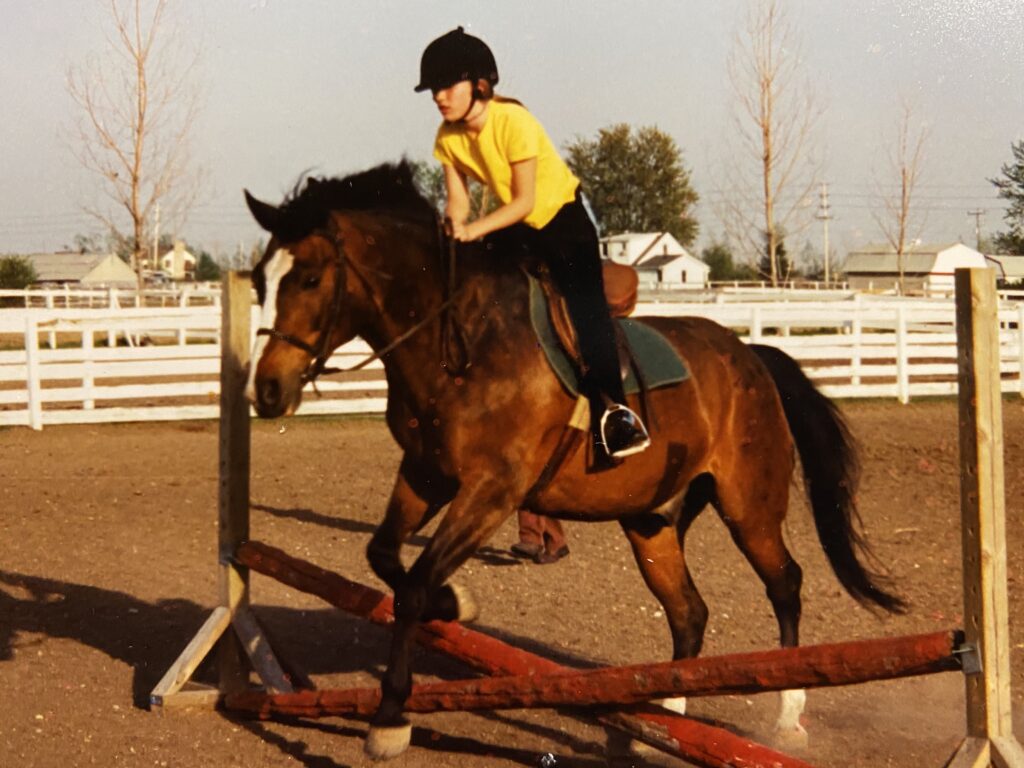
Beyond the mental strain comes the physical commitment to her craft “The efforts you make while riding, controlling your own body so that you can help the horse control theirs to the best of their ability; but also the demands on your body to do chores, walking all the horses in and out of the barn, feeding them all, cleaning stalls, moving hay around when the bales weigh between 20-30lbs each”.
The culture Seana is building in her barn is simple in theory, not in practice: put the horse first. It’s something her longtime trainer taught her. If a horse isn’t one hundred percent, you reassess. Even if the show is paid for, even if the jump school was planned or the rider is disappointed. “Just because you planned on horse showing this week or planned on jumping your horse today, if he or she isn’t 100% today then you need to re-evaluate your plans,” she says.
In many ways, the “horse girl” stereotype flattens this world into something cartoonish: braids and boots and childhood obsession. What it misses is that barns are ecosystems. They are small businesses, athletic facilities, therapy spaces, and living, breathing operations run largely by women who make hundreds of decisions a day.

Seana speaks often about the team around her, the people who help keep the machinery of the place moving. One of those essential roles belongs to the farrier, the specialist who trims and shoes the horses’ feet every few weeks. It’s a job that requires precision, strength and is foundational to everything else. Alex, the barn’s farrier, is part of that ecosystem.
“Shoeing isn’t just about trimming and nailing on a shoe. It’s about balance, movement, and giving a horse comfort and longevity,” says Alex, Ironstone’s farrier. “When you see a horse move freely after you’ve corrected a hoof imbalance, knowing your hands made that difference, that’s powerful. That’s when you realize it’s not just a job, It’s a calling.”
In 1996, a lilac paperback made it easy to romanticize the idea of the dream horse. What it didn’t show were the early mornings, long nights and the mental and physical strain it takes. “I’ve had many moments over the years with horses that have changed my perspective on things,” says Seana. “When you first make a really close connection with a horse and start building on those recurring moments with that horse it can truly change your life.”


