How Windsor-trained nurse Lisa Hogan turned conversations at her kitchen table into award-winning fertility care
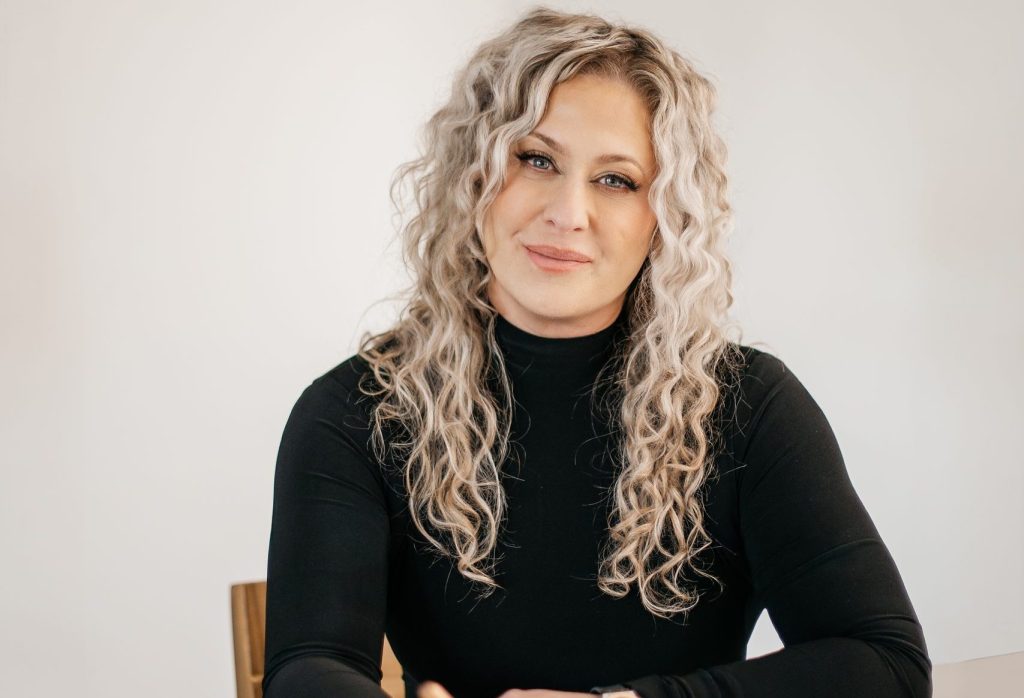
For 30 years, Windsor-trained nurse Lisa Hogan has been the person women can talk to. In the delivery room, in the fertility clinic and around her own kitchen table, she has cared for patients through some of the most hopeful and hardest moments of their lives, and she has never shied away from the conversations about reproductive health that so many of us find difficult. This fall, that work earned her one of the highest honours in Canadian fertility care, the Carole Rhéaume Award from the Canadian Fertility and Andrology Society. But before we get into that, let’s start at the beginning.
The seed was planted in Lisa Hogan’s mind through conversations with her daughters and their friends. As a mother of four girls, she found herself part of conversations about fertility and women’s health, and she realized the current curriculum simply wasn’t giving young women the information they needed to empower themselves. “I was a little bit surprised at how little it was talked about, both in school and sometimes in the home, because it can be an awkward, sensitive topic,” explains Hogan. “So that was something that always stayed in my mind.”
Later, a young woman came into Lisa’s office hoping to become an egg donor so her sister could finally have a baby. Before anything else could happen, she needed her own baseline testing (bloodwork, an ultrasound, a routine look at where things stood). When the results arrived, they revealed that she probably couldn’t donate. Furthermore, they showed that her own chances of having children one day were already at risk. “She just didn’t know any better,” says Hogan. “That’s not part of our normal testing.”
Hogan spent 18 years working in labour and delivery at Windsor Regional Hospital, then two more as a program manager, before moving into fertility. There, she ran treatment cycles and built programs from the ground up. Today she is Director of Third Party and Business Development at CReATe Fertility Centre in Toronto. She credits Windsor Regional for much of who she became. The obstetricians on her unit, her managers and hospital leadership all took time to teach her. “They saw something and invested in me,” she says. “I had an umbrella of learning there.”
Two decades at the bedside shaped how she builds programs now. “I’ve been with patients in the good times and the bad times,” she says. “I try to develop everything through the lens of how it’s going to affect the patient. You can’t forget why you’re here in the first place.”
What she heard around her kitchen table with her daughters and their friends, and what she saw in the clinic, eventually became one idea: Know Your Fertility Potential. Hogan thinks of it as preventative medicine, applied to fertility.
The program speaks to two groups. The first is college and university students, up to about age 30. The second is couples who know they want children someday but don’t feel ready. “Nobody talks to them about the decrease in live birth with age,” she says.
The science she teaches is simple and, for many people, a surprise. A woman is born with every egg she will ever have, and those eggs decline in number and quality as she ages. Men, however, produce new sperm roughly every 90 days, which means lifestyle changes can often improve sperm quality within months.
That second point matters to Hogan, because infertility is roughly a 50-50 split between partners. Too often, she says, the first question is still what’s wrong with the woman.
Her go-to example is a newly married couple in their early thirties. “We think we have time. That’s the most common thing,” she says. Her advice is to get baseline testing done. If the results suggest it, consider IVF now and freeze embryos to transfer later, when you’re ready. Government funding is available to help. “Routine baseline testing related to fertility is not standard unless actively trying to conceive. The decline in live birth rates is due to the natural decline in egg quality with age. It’s important to have an accurate reflection of your fertility potential”.
She has put it into six words she repeats often:
Know today. Plan tomorrow. Protect your future.
The gap isn’t only in what patients know. Hogan also teaches family physicians, nurse practitioners and midwives how to order fertility testing and read the results. The standard advice, she says, is still to try for six months to a year and come back if nothing happens. For many women, who already feel their reproductive health gets brushed aside, that answer is where they stop asking.
Hogan wants to change that, and to lift some of the shame people carry along the way. “There’s a stigma attached to saying ‘I’m having difficulty,’ or ‘I used an egg donor,’ or ‘I used a surrogate,'” she says. “We need to destigmatize it.”
As Hogan took her teaching campaigns further across the province, she ran into a problem education alone couldn’t fix. In parts of the region, there is no local access to the ultrasounds and bloodwork fertility testing requires. Patients were driving hours each way for a single appointment. So, she built a second program, this one for remote and rural access. CReATe trains local health professionals, working within their scope of practice, to perform the testing where patients live. A technician in North Bay captures the ultrasound images, and a physician in Toronto views them, measures them and makes the diagnosis. The same approach works for testing and for treatment.

Access, for Hogan, also means giving people more than one place to turn. She is now overseeing the opening of CReATe’s new Windsor satellite clinic, expected to open in November under Dr. Joshua Polsky.
Polsky grew up in Windsor, completing his education at the University of Windsor, then training in Toronto and London, and eventually coming back home in 2001. He has spent the 25 years since practicing obstetrics and gynecology in the city, including plenty of 3 a.m. deliveries, but he felt it was time for a change of direction.
The clinic will focus on three areas he sees as underserved in Windsor-Essex. The first is fertility care: cycle monitoring and IUI here at home, with IVF patients travelling to Toronto only for egg retrieval and embryo transfer. The second is early pregnancy assessment. Patients facing bleeding, cramping or the fear of miscarriage often wait in emergency rooms, and the region is short on OB/GYNs. The clinic will offer bloodwork, ultrasound and a physician’s assessment in one visit. The third is fast access to contraception, including IUDs and hormonal implants.
Combined with his obstetric practice, Polsky says, care will run “right from conception to delivery.”
“Being from this area, I really feel that provincially we’re overlooked,” he says. “Providing services to the people of Windsor-Essex County is a passion and a goal of mine.”
Which brings us back to the award.
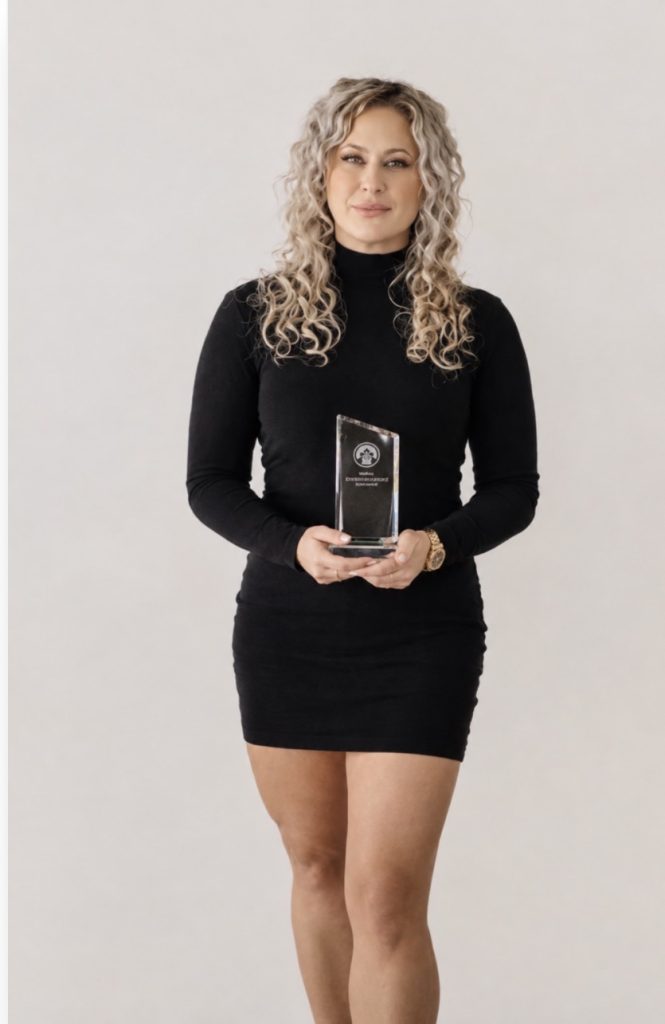
The Carole Rhéaume Award is presented by the Canadian Fertility and Andrology Society, with support from EMD Serono, to a nurse who has made a significant impact on the patient experience, clinical practice or public awareness of reproductive health. It carries the name of Carole Rhéaume, a fertility nurse at Ovo Clinic in Montreal who was known as a tireless advocate for her patients and for better access to care. She lost her life in the winter of 2015 while stopping to help a stranded motorist.
In choosing Hogan, the committee pointed to her work bringing fertility education, testing and care closer to underserved and rural communities, and to the partnerships she has built across healthcare organizations to make it happen. The award is presented at the CFAS Annual Meeting and includes sponsorship for Hogan to attend an international reproductive medicine conference, a fitting next step for work that has always been about reaching further.
When she first heard the news, her reaction was humility, “I was pleasantly surprised.”
Hogan is quick to share credit. She points to CReATe’s founder and CEO, its genetics research team and, above all, the front-line nurses who now do the patient care she once did, and who believed in her programs enough to carry them. “Nobody can do anything alone,” she says.
The award, she says, felt like validation of the work, the travel, and what her family gave up so she could chase it.
“I feel very lucky that my passion met my opportunity,” she says. “It’s an overwhelming feeling, knowing I’ve accomplished something good on behalf of young women everywhere.”
Four of them are her daughters. The rest are the women she hopes will hear her message and trust CReATe to guide them on this journey.