
Ontario’s Greenhouse Sector Honoured for Creative Inroads into the American South
Fresh off a major marketing coup, two of the key decision makers at the representative body for the province’s greenhouse vegetable sector—our very own “producers’ guild”—discuss how Essex County became a global leader in controlled-environment agriculture, American demand for Ontario vegetables in a tempestuous world, and the future of one of our most impactful economic drivers.
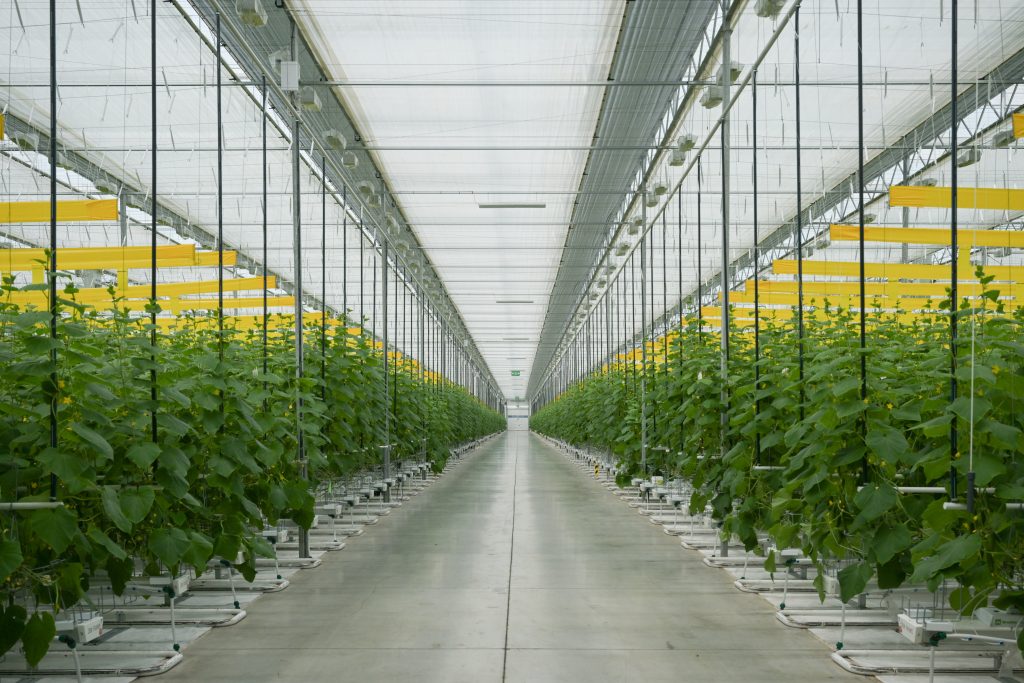
Ontario Greenhouse Vegetable Growers (OGVG; the acronym is, appropriately, something of a mouthful) is a nearly-60-year-old not-for-profit organization representing over 380 licensed growers, packing and marketing operations that supply fresh greenhouse tomatoes, cucumbers and peppers. Collectively, OGVG members occupy 4,500 acres of greenhouse space and bring produce to market on a staggering scale: Ontario greenhouses produce more than half a million tonnes of vegetables every year, including, to give one example, literal millions of English cucumbers every week.
Broadly committed to boosting the province’s greenhouse vegetable sector through advocacy, research, and what people in boardrooms call “value chain co-ordination,” OGVG endeavours to connect its growers with government agencies, consumers, retailers, and food service operators across the continent while exploring development opportunities in areas like food safety, environment, and market performance.
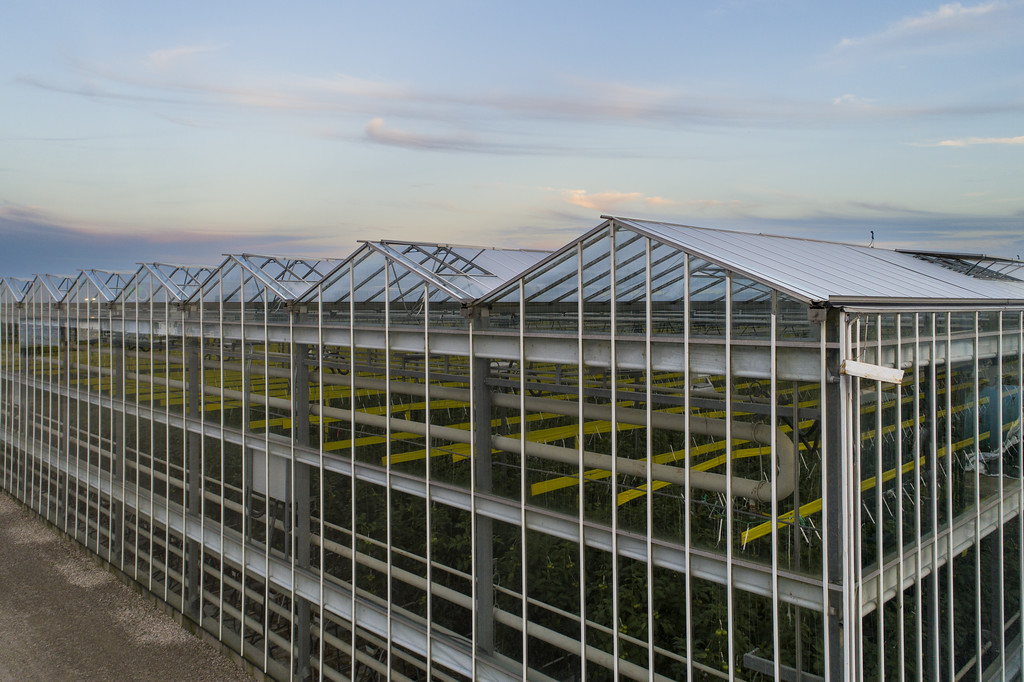
According to Executive Director Richard Lee, Ontario accounts for nearly three quarters of Canada’s total greenhouse area and boasts the largest concentration of greenhouses in North America—and the second largest cluster in the world. By Lee’s estimate, about 80 percent of the province’s total greenhouse footprint is located right here in Essex County. Our proximity to the border and surfeit of year-round sunlight—by Canadian standards, at least—are major contributing factors, but Lee is careful to foreground the human history of greenhouse growth in our region. “We can’t forget that this sector has been built on the backs of immigrants who decided to establish greenhouse operations in this area,” he stresses. “And when you think about the investments made just in the last 10 years—our greenhouse sector has invested over $10 billion in expansions—essentially, those are entrepreneurial dollars directly resulting in job creation.”
Historically, the upside of the Ontario greenhouse sector has been relatively straightforward access to the American market. Today, Ontario greenhouses export about 85 percent of their product in that direction. “We grow so much in Ontario alone, explains Lee, Canada couldn’t eat ourselves out of the production we see.”
American appetites are far from exhausted. Recently, using sophisticated data analysis and market research, the OGVG team identified several specific States as underserved areas—in other words, potential growth markets. After fulsome discussion, they decided to precisely target Tennessee. (Next, attention turns to Missouri.) “The overall concept was to educate consumers and increase the awareness and consumption of greenhouse vegetables in the Tennessee consumer market,” says Lee.
As a result of this outreach initiative, recent OGVG marketing and branding campaigns won two “platinum” honours at the Hermes Creative Awards, an international competition for creative professionals that bills itself as one of the oldest and largest such contests in the world. According to Rachel Boucher, who heads marketing, communications, and public relations, the highest possible Hermes awards were only the latest of several honours garnered by her team’s “Tennessee Tested, Summertime Approved” campaign, which was developed with a local marketing firm.
“To be recognized alongside world-class brands from around the globe has garnered a lot of attention,” boasts Boucher, who notes the campaign involved interactive digital content and paid social media influencers to generate what she calls “culturally relevant messaging.” “It’s a proud moment for all of us and a great acknowledgement for our sector.”

While American demand for Ontario vegetables is undeniable, the uncertain, everchanging regulatory landscape around bilateral trade between Canada and our neighbours to the south has lately challenged OGVG members. “A day doesn’t go by that we don’t have a discussion on trade and the relationship with the United States,” says Lee, the weight of the situation evident in his voice. “A lot of people have said that relationship is broken, but I don’t believe it is; I think it’s changed.”
According to Lee, during a three-day period in March of this year when broad, indiscriminate tariffs were levied on Canadian goods by the Trump administration, OGVG members paid over $7 million in tariffs. While this example is extreme, the uncertain waters facing the sector at moment require expert navigation.
“We spend a considerable amount of time working with government officials at all levels of government on both sides of the border,” says Lee, recently returned from a high-level policy conference in Washington. “Ensuring that growers have reliable access to key markets and that their interests are represented when trade issues do arise—especially when we’re looking for certainties when making long-term planning and capital investments—is at the forefront of our advocacy strategy. We support what our members need to operate successfully, and the environment they’re operating in is increasingly complex.”
Fortunately, there is some homegrown hope for the sector: Lee suspects the recent federal announcement on funding to support domestic food security will meaningfully boost the greenhouse sector. “I think you’re going to see a big push to focus on commodities we can grow in greenhouses,” he relates, “to reduce our reliance on imported product and address some of the climate change issues we’re seeing.”
Looking forward, according to a 2022 OGVG study in sustainable prosperity, the sector should expect approximately five-percent annual growth over the next decade.

In part, this growth forecast considers the sector’s readiness and capacity to meet modern consumer tastes as they evolve. “Today’s consumers are more adventurous and interested in trying new varieties, flavours, and formats,” says Lee, citing huge growth in snackable products like mini cucumbers, seedless bit-sized peppers, and grape and cherry tomatoes. “Ultimately, we’re innovators by nature and always looking for opportunities to diversify offerings while also meeting consumer demand.”
Speaking of innovation, Lee is bullish about the medium-term potential for greenhouse growers of emergent technologies incorporating artificial intelligence, machine learning, predictive analytics, automation, and robotics. But perhaps that’s a conversation for another day.
Everything else aside, Windsor-Essex residents are fortunate to so readily find the freshest possible greenhouse-grown tomatoes, peppers, and cucumbers on our tables.
“We should be very proud to live in a region that grows Ontario greenhouse,” says Boucher. “When you buy wine from the Napa Valley, you know it’s going to be good; it’s not even a question. When you buy Ontario greenhouse produce? It’s going to be good.


