
A guide to building a capsule wardrobe
Oh god, please don’t bring low-rise jeans back!” I heard my friend say as we walked through the doors of Devonshire Mall, a giant advertisement for a look that screamed “Y2K” glaring at us. I looked up, flashbacks of my childhood wardrobe circling through my mind. “They’ll have to learn the hard way,” I sighed, bracing myself for a velour tracksuit with a bedazzled backside to come creeping through the shadows.
I believe it was Coco Chanel who said, “Fashion changes, but style endures,” a sentiment that perfectly captures the idea of a capsule wardrobe. I caught up with Mena Biafora Vincelli, better known as Style Me Mena, to better understand this trend that allows you to build a wardrobe full of timeless staples to make the most of your closet and your wallet. “A capsule wardrobe is a thoughtfully edited collection of clothing where everything works together. It’s not about owning less—it’s about owning better,” explains Mena. “Capsule wardrobes save time in the morning and remove the ‘I have nothing to wear’ feeling. They reduce over-shopping, help you make smarter purchases, and create outfits that always look polished.”

The term “capsule wardrobe” actually dates to the 1970s and was coined by London boutique owner Susie Faux. In her book Wardrobe, Susie highlights the importance of finding a capsule wardrobe that fits your lifestyle: “The idea is to have clothes that you love to wear, that are right for your life,” says Faux. A decade later, the idea became mainstream when Donna Karan introduced her new line called “Seven Easy Pieces.” This collection highlighted a few core pieces that could be mixed and matched to create a full wardrobe, making fashion more accessible. Decades later, the capsule circled back with the rise of Pinterest vision boards, but this time added a new pillar to its classic branding—sustainability. The concept played perfectly into the intentional living wave that became part of the zeitgeist with the popularity of Marie Kondo’s, “Does this spark joy?”
Before you Marie Kondo half your closet, Mena stresses that building a capsule wardrobe starts with honesty. “Start with your real life, not your fantasy life,” she says. “Look at what you actually wear day to day—work, casual, events, travel—and build your wardrobe to support that lifestyle.”
From there, it’s about editing with intention. Keep pieces that fit your current body, feel good, and reflect who you are now—not who you were five years ago, or who you think you should be. If you’re not sure what your style even is, Mena suggests starting with a few guiding words. “Choose three to five words that describe how you want to look and feel—polished, edgy, feminine, relaxed. Use your words as your filter for everything.”
Functionally, most capsule wardrobes are built from a mix of core categories: tops, bottoms, layers, dresses, shoes, outerwear, and accessories. Within those, Mena points to a few tried-and-true staples: a white button-down, a classic blazer, a great pair of jeans, a little black dress, a versatile knit, neutral flats, and a structured coat.
“Each piece can be styled multiple ways,” she says. “That’s what gives you more outfits with less effort.”
But one of the most overlooked elements in any wardrobe is colour.
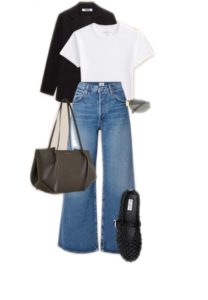
“Neutrals form the backbone of a capsule wardrobe,” Mena explains. “Choose two to three that flatter you, like black, navy, camel, or ivory, then add a few accent colours you love. That’s what allows everything to mix and match effortlessly.”
Fit, she adds, is just as important: “A smaller wardrobe only works if your clothes fit beautifully. Prioritize pieces that flatter your shape, and don’t be afraid to tailor. Those small changes make a big difference in how polished you look.”
If you’re feeling the urge to go out and replace everything immediately, don’t do it.
“Shop intentionally, not on impulse,” Mena says. “Only buy pieces that fill gaps and can be styled at least three ways with what you already own.” She also recommends thinking in terms of cost per wear: a higher-quality piece you wear often will always outvalue a cheaper item that sits untouched. And while the idea of a smaller wardrobe might sound restrictive, Mena sees it differently. “A capsule wardrobe is about freedom, not restriction; it gives you confidence, ease, and less stress every day.”
At the end of the day, trends will always come and go. Low-rise jeans might make their comeback, but personal style is how you make a statement, and with these tips from Mena, you’ll never have to say the words, “I have nothing to wear!” again.