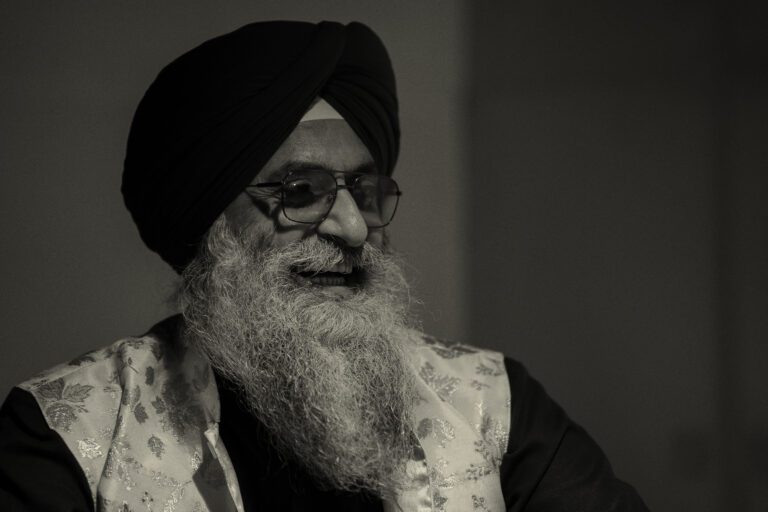
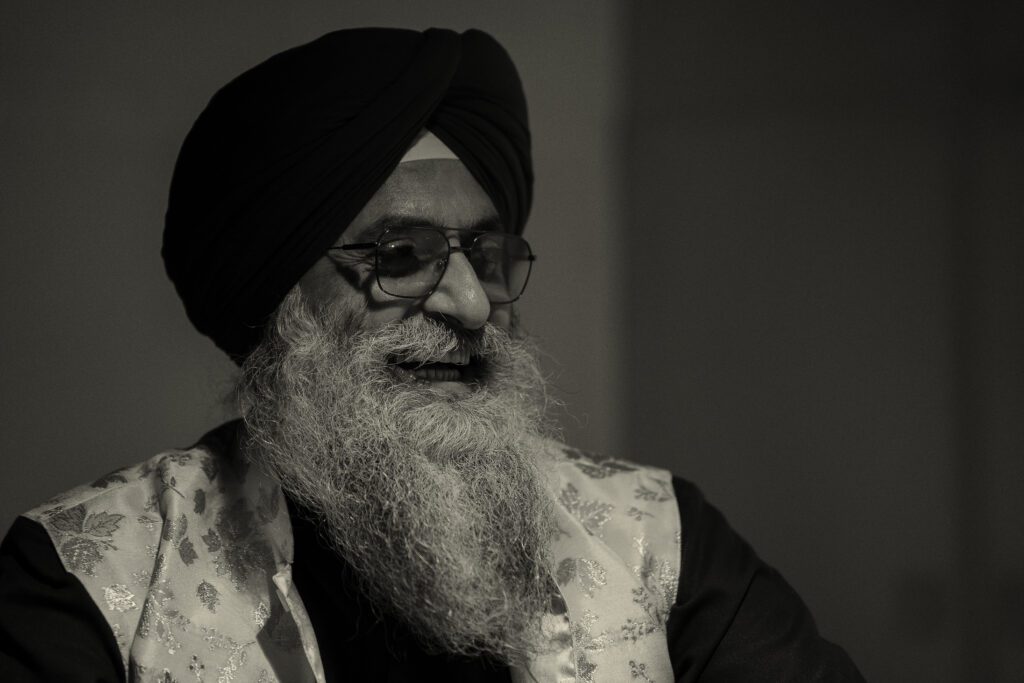
The journey of a man who built the life of his dreams one mile, one lesson, one belief at a time.
When I walk into the coffee shop on a Sunday afternoon, I expect the usual noise: chairs scraping, cups clinking, the air thick with the aroma of freshly ground coffee.
I spot him before I even start looking.
“Hello,” he says, as soon as our eyes meet.
Gurbax Wahid greets me like an old friend, even though we’ve never met before.
We order quickly, peppermint tea for me, double espresso for him. As we glance around the bustling café, the chatter and clatter of a dozen conversations fade into white noise. We choose a corner table that gives us a view of the city that shapes his story.
“So, where do we start?” he asks.
I hold my cup in both hands, take a slow sip.
“Let’s start at the beginning.”
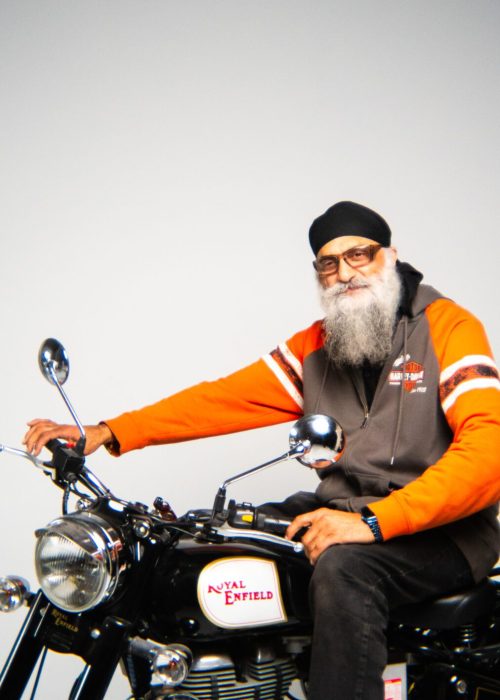
He shrugs off his Harley Davidson jacket, leans back, and begins to tell a story that takes me far from the café we’re sitting in.
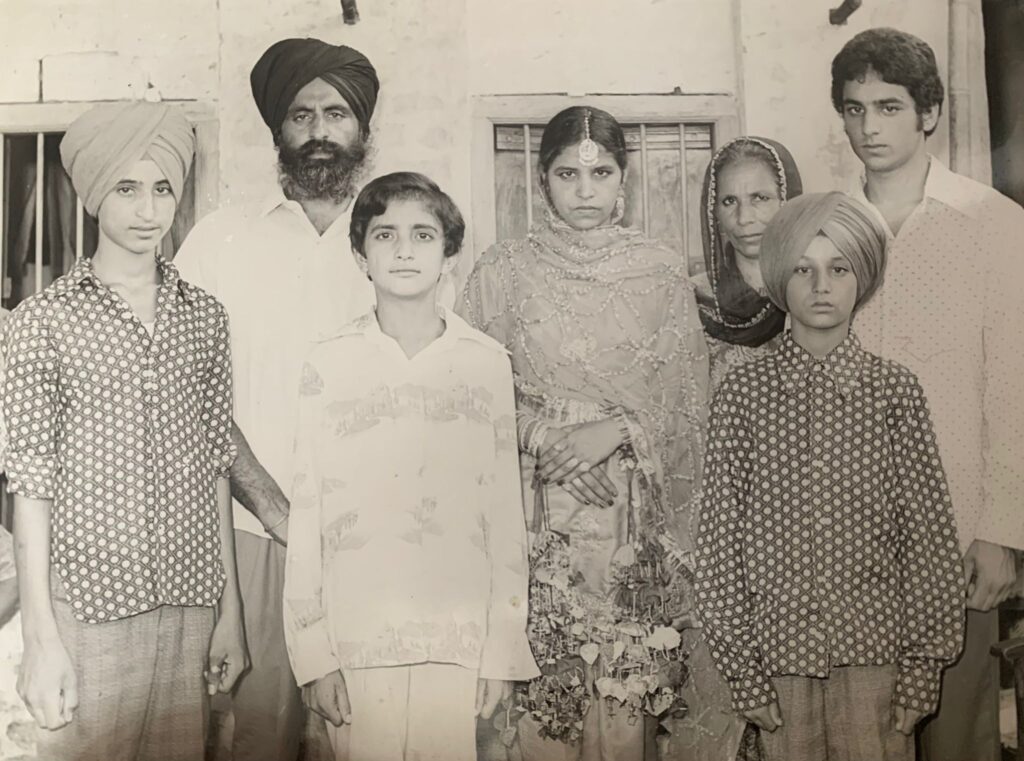
Gurbax was born in a small village in northern India where there was no electricity, no running water, and no formal schooling; life was measured by land and labour. His family farmed rice, wheat, sugarcane, and cotton entirely by hand. “One acre could take half a day to work,” he explains. His mother spun cotton by hand, dyed it, and stitched it into clothing the family wore.
“I still have pieces of it,” he says, smiling down at the delicate porcelain of his coffee cup.
His father served in the Indian Army and was also a professional wrestler. “He was very good,” Gurbax recalls. “He reached a high level, almost like an Olympic level in India.” Then, in an instant, everything changed.
“I was around eleven,” Gurbax says quietly. “Suddenly, my life was… different.”
His father suffered a catastrophic injury, a fractured neck that left him paralyzed.
The next day, government officials arrived and told his mother to come to the hospital. She and Gurbax’s grandfather were escorted to the hospital in an army vehicle but learned his father had already been flown to New Delhi. Gurbax was separated from his family, his home, and everything familiar. “Those were the worst years of my life,” he says.
He doesn’t elaborate.
He doesn’t have to.

Eventually, his father recovered enough to live in a wheelchair. The family reunited, and life continued. Altered, but moving forward.
School didn’t come easily for Gurbax who ended up failing the tenth grade. What made the difference in his education wasn’t a sudden breakthrough, but persistence and his father’s support. “My father wheeled himself with me to the principal’s office,” he says. “He begged them to give me a chance.”
They did.
Gurbax excelled in the machining program he was enrolled in. Within two years, he was among the top students and thanks to his father’s army connections, he got his first apprenticeship. “They tested me harder than anyone else,” he says. “And I passed.” His father’s advocacy opened a new door that shifted his trajectory.
By his early twenties, his family had moved from government housing to private rentals, then to a home of their own. Stability had arrived, but stillness never did.
In 1990, Gurbax came to Canada with only twenty dollars and a dream. “No language, no education, no money,” he says, smiling. “But a lot of belief and a desire to do well.”
The early years were tough. He worked in a factory by day a donut shop at night and commuted between the two on a $10 bike purchased at a yard sale. Yet he made sure his new wife and growing family were cared for. “It was tough,” he says. “But my kids always had what they needed.”
His son Bikram remembers seeing all of this happen, “I’ve seen him build things brick by brick,” Bikram says. “I’ve seen the wall fall; I’ve seen businesses fail.” But he never saw his father panic. “No matter what happened, he just kept working. You could always count on my dad to make it work.”
For Gurbax, his path was anything but linear. Machining paid the bills when possible, and eventually taxi driving filled the gaps. He spent his days at machines and weekends behind the wheel, learning Windsor one street and one conversation at a time. Eventually owning a fleet of taxis turning his part-time job into an entrepreneurial endeavor.

English came slowly, he taught himself by listening to CKLW radio, repeating phrases, and learning cadence before grammar.
“Radio?” I repeat. He leans back and smiles, “radio,” he laughs.
While he’s telling me about driving a taxi, an elegantly dressed woman stops at our table.
“I just wanted to say bye, Gurbax.”
They share a few words before she heads out of the café.
Moments like this happen often. Calls, messages, and people reaching out years later to say hello. “The fact that someone remembered me and called five years later,” he says, “that meant something to me.”
Community came naturally. Through the Sikh temple, and volunteer work with Easter Seals, Goodfellows and The Downtown Mission, his work brought him into places he never expected.
In his late thirties, education came back into focus when Gurbax decided to finish Grade 12. He worked nights and went to school full-time, studying English, Math, and Computer Studies. He jokes about nodding off as he remembers those days. He ended up graduating at the top of his class earning him The Student of The Year award. “I graduated at thirty-seven,” he says. “With a wife, kids, and two jobs.”
Talking about his children softens Gurbax. His daughter has three degrees and works in marketing, while his son achieved two degrees and is now the co-founder of Vision Studios in Windsor. “I used to think success only meant being a doctor or lawyer,” he says, shaking his head. “I’ve learned the world is bigger than that.”
Later, his son Bikram shares what that change looked like from his perspective. Growing up, his father wanted his children to have the safety that comes with titles and certainty, but over time, Bikram’s love for creativity became clear. Cameras showed up, music was made, and new ideas took shape.
When Vision Studios opened last year, his father saw something new. “The way his eyes light up,” Bikram says, “the way he sends everything I make to his friends… that’s when I knew he was proud.”
At one point, my conversation with Gurbax turns to something less tangible. Manifestation. I mention the Mercedes keychain he once kept in his room, long before he could afford the car. “I visualized,” he says. “Canada is a land of dreams, but you need the drive: language, education, money. Without them, it’s hard.”
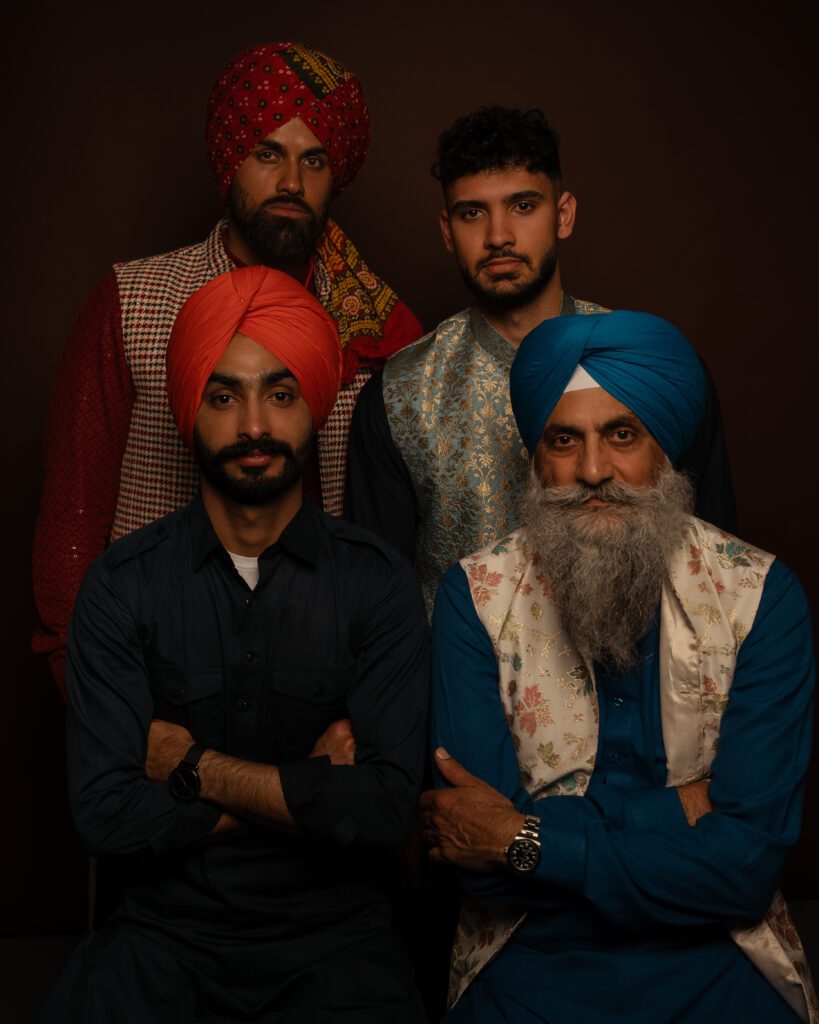
Now, watching his father, his son sees a different version of aging than he expected. “Society tells you that getting older means slowing down,” he says. “But my dad works like a twenty-year-old.”
He laughs.
“If you want something done, you go to my dad.”
While we’re talking about visualization and manifestation, Gurbax gives me a nugget of wisdom. “If you plant a cactus,” he says, “don’t expect mangoes.”
I write it down, and for the first time since we sat down, I glance at my notes. “Your motorcycle!” I almost yell. “Tell me about it!” He laughs. “My dream machine!” he says, matching my excitement.
Gurbax bought his first bike decades ago. It wasn’t the exact one he wanted, but he learned on it. Years later, he finally got the classic Harley he’d always wanted. “I love it,” he says. “It’s freedom.”
By the time we finish our drinks, the café is empty. We’ve talked past closing without realizing it. “One last thing,” I say. “If you could talk to your younger self, the one who just arrived in Canada with only a dream, what would you tell him?”
“Believe in yourself,” he says with a smile.
Outside, the street keeps humming, lives crossing and parting again. The word ‘sonder’ comes to mind. The realization that every passerby has a deep, complex story to share. Sometimes, all it takes is someone asking, where do we start?